Showing posts with label life cycle. Show all posts

Tuesday, April 16, 2013

Kitaran Hidup Pokok Katak Puru

 Before I went off to Borneo island, our Nam Nam tree fruit season has returned and this was the last edibles I harvested. At least, I got to satisfy my craving for nam nam fruit before my flight to Sabah. I hope the boys at home will continuously pick butterfly pea flowers so that the plants will not get old by producing seed pods. No one going to remember to harvest sponge luffa fruits, and I think I will find some old fruits when I returned. Nevermind, I can used them as sponge if the fruits did not get rotten with the frequent rain.
 Nam nam can be grown easily from fresh seeds. Nam nam seedlings just sprouted from seeds. Nam nam tree is native to Peninsular Malaysia. However, it is not a plant native to Borneo island. Not many people from Borneo island will recognise this fruit. On the other hand, Borneo island also have many native fruit plants which only distribution is on the island and not growing wild here in Peninsular Malaysia.
 Nam nam seedlings must be handle with care when transplanting, they have really long taproot. Even the older seedlings, have very strong long taproot and hardly any small tiny hairy hair attached to the main taproot. I fell back on my butt several times to pull out nam nam seedlings which grows like weed in our garden.
Nam nam flowers.
 For a tropical fruit tree, Nam nam tree is categorized as small. It is suitable for terrace house if you regular prune the tree. My grandfather which lives in a single storey terrace house grows Nam Nam tree outside of his front gate. Underneath this canopy...
 Nam nam tree fruits all year round. They don't seem to have a specific fruiting season. Although, usually it is eaten raw, I have cook Nam nam fruit in Curry, yellow curry and Assam Pedas dishes and my family likes it (gambar makanan lawat sini).
 Squirrels also like nam nam fruit and here is a fruit that has been munched by squirrel. Nam nam fruit does not have tiny seeds but one big seeds.

Sunday, February 3, 2013

Kitaran Hidup Sengkuang (Seeds Give-Away)

 We did a lot of digging this week and one of the happy digging time was taking out the jicama/mexican turnip or in Malaysia known as sengkuang' tubers out from the soil. Now I need some ideas from other gardeners how to enjoy this sengkuang, Any favourite dishes? Facebook buddy gardeners has introduce me to Nyonya dish 'Ju Hu Char' which is jicama stir-fry with dried cuttlefish which I would like to try as soon as I get some dried cuttlefish.
 Sengkuang grows easily in the tropics as it loves heat and high humidity. Definitely a good plant for novice gardener in tropics to try. For juicy tubers will need lots of water. Not enough water will cause the growing tubers to crack which happened when we tried growing them in Adelaide that have really dry summer because we did not water enough the plants in summer as we should. Infrequent consistent watering during drought season might resulted in crack tubers. It was a tricky attempts at growing sengkuang in Mediterranean climate but so easily grown here in the tropics. Experiencing different climate growing sengkuang was to me a valuable one. Don't judge by the size of the sengkuang tubers, younger tubers are more sweeter than the older ones.
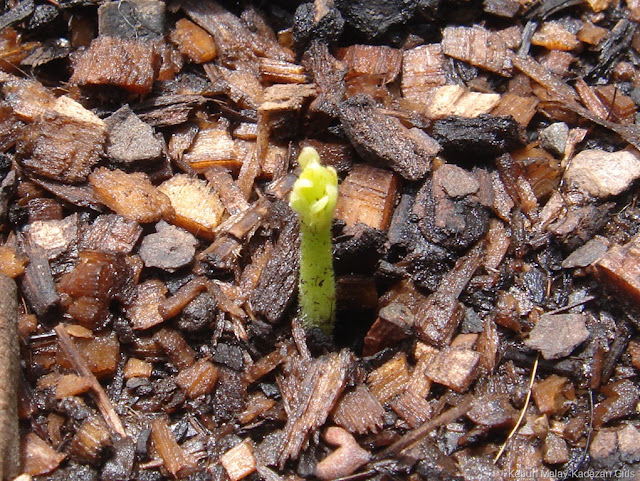
Sprouted sengkuang seeds poking out.
 Sengkuang actually does not require many space to grow. In fact it can also be grown in containers which we did in our previous home with limited space (link). Sengkuang plants is a half-climber. When the plants are small you train them up and later on they find their own way. If you don't have a rich fertile soil, you can grow sengkuang plant first as they are legume, a natural nitrogen-fixer.
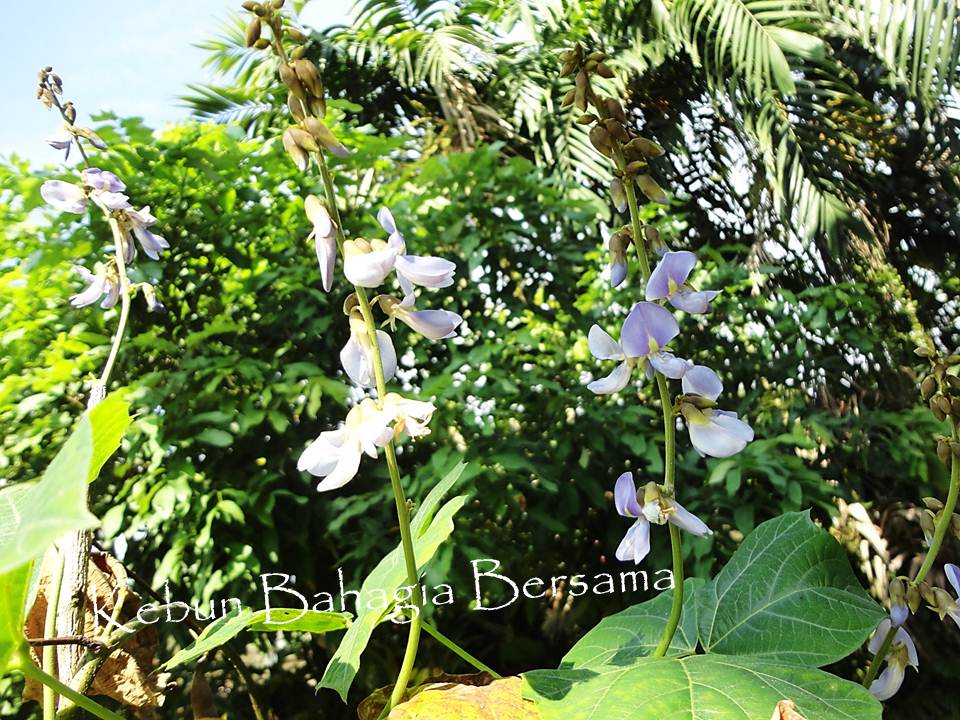
 Sengkuang flowers. The sengkuang plants that we grown in Adelaide never produces flowers. The lilac flower shape resembles closely to winged bean and snake bean.
Dried Sengkuang Seed pods. The sengkuang beans are not edible. 
Sengkuang Seeds.
This week we harvested a pamelo, lemons, bananas, bird-eyes chilli, Pandan leaves, Passion fruit, Calamansi fruits, Nam Nam fruit, Tamarind Fruits, Asam Gelugor (Garcinia atroviridis) leaves.

 I am giving away some sengkuang seeds for 3 gardeners randomly picked from the comments. Will announce the recipient at my next post.

Have a lovely weekend.

Sunday, September 30, 2012

Spring Onion Life Cycle

  Spring onion or the salad onion taste milder than other onion. Its hollow leaves finely chop and top on fried rice/noodles, porridge or other dishes making it more appealing. Not just making dishes appealing or decorative but add more nutrition good for the health no doubt. My children and I prefer spring onion that does not produce bulb unlike onions or shallots leaves for toppings because it has mild taste and not hot.
 Last year autumn, we transplanted some spring onion seedling under sunflower plants to make the garden more productive. Those spring onion does not seem to mind sitting under the sunflower because it still received direct light from the sun in the morning. We also had a row of carrots growing in front of the spring onion plants.
Spring onion does not need to be harvest whole, can be treated as come and cut again plant. My husband uses a lot of spring onion to cook especially when he makes misoshiru (miso soup). He is the Japanese chef in the family. My sons like prawn and spring onion toast. We had surplus spring onion and when spring came last year our spring onion goes to produce seeds. Bees really like the spring onion flower, there are always hovering around the plant at the moment.
Spring onion is surprisingly drought-hardy when well-established. We left them growing with neglect on the patch and the plants still live till today forgotten. Interestingly, this spring those spring onion plants starts to flower again producing seeds. Furthermore, the flower are much bigger compared to previous year when it flowers for the first time. Spring onion are biennial plant. So I thought when the plant has produce seeds on its second year (last year spring), it will eventually dies. But spring onion continue evergreen growing and surprisingly producing seeds again this year. The spring onion flowers in its second spring are more well pollinated as we harvest more seeds this year and the quality of the seeds looks much better compared to last spring.
This is how our flowering spring onion plants in its second spring season looks at the moment. Last spring, we planted a chilli plant in between these spring onion plants and we had no encounter or problem with pest on this chilli plant. This over-wintered chilli plant survived and will need a little bit of hair cut getting rid of old-leaves as it has already start to sprout new baby leaves and looks really disheveled at the moment.
The dried pods opening up and pop goes the seeds.

Have a nice weekend gardening!

Friday, September 14, 2012

Rainbow Chard Life-Cycle

We sowed our first batch of Rainbow Chard seeds last year autumn and we have never need to sow any rainbow chard seeds ever again that was the first and last sowing we needed in our garden. Since then there are continues supply of rainbow chard up until now available for us growing without care and thriving in our garden. This is because we let several rainbow chard go to seeds last spring and we often found volunteer seedlings in the garden ready for transplanting if we wish so. Several of our rainbow chard plants are showing the sign to flower now that we officially entered spring this month.
Rainbow Chard can grow up to 50cm tall but it is a plant that also can be grown in container if you have a small or balcony garden. For example the depth of soil in the container on the photo above is about 25cm. Rainbow Chard plant can look ornamental as well.
Rainbow chard needs full sun or more than 6 hours direct sunlight to grow well. Two to Four plants will be sufficient for a small family. Rainbow chard is a cut and come again plant. I  observed that rainbow chard is heat and drought plant once established last summer. Rainbow chard does not grow much in partial shade or growth is very slow.
A healthy flowering rainbow chard plant can grow up to 7~8 feet tall.
I was surprise to see the bottom of the flowering rainbow chard plant forms beetroot. Rainbow Chard and beet root are cousins, they belong to the same family.
Rainbow chard pollinator agent is wind.
Rainbow chard seeds drying on the plant.

How do you like to enjoy your rainbow chard?


Friday, July 27, 2012

Watermelon Radish Life-Cycle


 Watermelon Radish looks like a fruit when you cut it into half as the bright reddish colour under the skin show itself. I would like to express my gratitude to Mr. H at Subsistence Pattern for introducing us to this gorgeous radish and the precious seeds we received. I miss Subsistence Pattern posting as their passion of growing their own food and saving seeds is always so inspiring. Surprisingly, this radish variety does not have the pungent radish smell like the other varieties in the radish group. Watermelon radish resemble turnip at a glance. But it can grow much bigger at the size of  my palm remaining juicy without becoming woody. Compared with other radish variety that we have grown in our garden, watermelon radish root growth is rather slow. However, we are very fond of this radish flavour compare with other radish. This is one of our favourite radish to grow in the garden list after the heat waves has gone and the weather turns milder.

 But in our climate, sowing watermelon radish in spring just make the plants bolt early without producing much root. This is similar case with daikon (Japanese radish) and some other varieties as well. I am not sure the reason why but I was thinking that some radish varieties might be sensitive to the longer-daylight hours.  The best season in our garden for sowing watermelon radish or daikon will be end of summer or early fall for producing nice size of roots. We also extend the sowing season up till June/July (early~mid winter) for succession sowing just to replace other veggies that have been harvested.
 Watermelon radish can be grown well in container. Just make sure the soil does not dry out, keep moist. If the part top of the root or shoulder is well-exposed to the sunlight, this part will turn green but still edible. I frequently make mistake with the watermelon radish spacing and sowed to closely with each other. I forgot that watermelon radish does seems to have larger size of leaves compared with the other radish that we grow. So more space in between is required to harvest bigger roots. 
Unintentionally, some watermelon radish starts to flower and it was nice timing at that time since no other brassica veggies were producing flower so it was a chance to collect seeds. I never can catch up in each spring with harvesting before the plants starts to flower. Letting one plant flower for collecting seeds is more than enough supply for a few years. The watermelon radish flower resembles daikon and kailan (chinese broccoli) closely. The watermelon radish seed pod is roundish at the bottom and with a long pointy end. Last end summer, we sowed some of this fresh seeds just to confirm whether the seeds is pure or not. We were happy that no cross-pollination occurred and we managed to harvest pure seeds.

Sorry, I have not been a good blogger friend this few months.
Since last Sunday Rayyan has not feeling well maybe caught some bug.
He transferred it to me, so I started not feeling well today.
Getting rounder and 37 weeks pregnant already, waiting for baby to decide her date of birth.
Its getting harder to fall asleep, feel like a zombie.
Hope to catch up.

Sesiapa yang berminat untuk cuba tanam watermelon radish lawatilah laman ini (klik ayat ini).

Thursday, June 21, 2012

Cherrytime Capsicum Life-Cycle

The cherrytime capsicum has been the most reliable and prolific capsicum this year together with banana capsicum compare to the other varieties we planted last warm season. The cherrytime capsicum produces small size capsicum fruit with average of 5cm. The ripen fruits is sweet and have a roundish shape with a pointed end which looks like a cute heart-shape sometime. This capsicum become more sweeter when grill or roasted which I found out this year experimenting in the kitchen. It goes nicely with grill yakitori/kebab alternating between meat and cherrytime capsicum which our family enjoy.
The cherrytime capsicum can be left over winter (frost-free area) in the patch. The photo below are 2 plants of cherrytime capsicum which still have some unripen fruit left living through last winter (photo taken early winter last year 2011). Snails or Slugs sometime munch on the capsicum leaves during winter.  As you can see, no protection is provided for this cherrytime capsicum plants during winter.
This is one of the same plants above with some fruits ripening earlier this month of June (early winter). This plant is going through its 2nd winter now.
When I tried growing this cherrytime capsicum the first time with the seeds I bought from Eden Seeds company I have trouble germinating the seeds. The germination rate was really poor about 20%. However, we saved some seeds last year.
Last warm season I sowed the left-over seeds I bought from Eden seeds and our own home-saved cherrytime capsicum at the same week. The left-over seeds only give me one plant. Amazingly, the seeds that we saved, germination was very good. Since we had many seeds, I simply sprinkled home-saved cherrytime capsicum seeds in one straight line about 40 cm long. I was not expecting a good germination rate that time because it was just the first generation of seeds we saved. But suddenly in a few days I have so many seedlings sprouted closely together with hardly any gap. I guess that the home-saved seeds has adapt ed well with our garden micro-climate here. This is one of the main reason saving seeds is fun and give a sense of a small achivement from the garden.
The cherrytime capsicum grows well in container too. In this cold weather, this cherry capsicum plant is growing along with carrots in the same container saving space and makes it productive. In summer, the cherry capsicum plant was growing along with a different plant but I can't remember which at the moment (I think it was watermelon plants).
Now, we are in Royal Children Hospital in Melbourne since last week Wednesday because Rayyan needed his 3rd cardiac surgery. He had his surgery last Friday and he is really recovering well. He had an open heart surgery but this is the first time the medical staff did not stop the heart while they did the surgery. Amazingly from experience this time he does recovery very fast and will soon be a troublemaker again. He made the nurses busy by pulling out his wires and putting it on his teddy which makes his heart monitor alarms beeping continuously. Many of the nurses and medical staffs remember Rayyan from his previous cardiac surgeries and was surprised Rayyan a boy now and not a baby like before. I have limited access with internet as I am using the hospital resource centre computer at the moment. Hopefully next week, we will back home.

Saturday, May 19, 2012

Bush Bean Redland Pioneer Life Cycle

The first bush bean that we grown was 'Redland Pioneer' in our garden and has been the best performer among the bush beans we have tried (not many though still to compare with). But it has been the most reliable bean to fill in the hungry gap. Bush bean grows really fast and provide some beans in 7~8weeks of growing, sometime earlier if the weather is preferable for their optimum growth. It is really an important veggie in our garden since it fill the hungry gap in spring and again in fall. We sow 'Redland Pioneer' bush bean 3 times a year-spring, summer and autumn. Well, rather than leaving the soil bare after harvesting other veggies, we might as well grow beans so they help fix nitrogen into the soil again. Its a win-win situation. I feel that bush bean seeds does not require much water to germinate, too much water can cause the seeds to rot easily in cool season. A really good veggie for a lazy gardener like me, bush beans not a heavy drinker and not a heavy feeder.
Bush bean 'Redland Pioneer' seedlings'
Because we don't have that much space to grow and very greedy, I tried to maximize the space we have by planting the plants densely together in spring/summer. I can get away growing them densely in a spot with full sun because they don't compete each other with light and it helps keep the soil moist longer as it is covered with the foliage. Less evaporation. Save money from buying mulch. I gave up with mulching this year because the bird will cause serious damage by their scratching habit on seedlings. Last spring when we transplanted tomato at this area, we direct-sowed bush bean seeds around the tomato seedlings. It did very well and the tomatoes grow without any fuss. Humidity is very low in our garden warm season here so our tomato plants can readily accept being close to other plants and I don't have to worry about good air circulation.

Beans grow well in partial shade too. But not as prolific as in full sun which you get more beans to harvest. In partial shade, I probably plant shorter plants together with beans to give the bean plants more light and not to over-shadowed them. We had many violas flower plant volunteers one spring season, and I transplanted them as border plant just to make the garden look more colourful. If in tropics, I can imagine portulaca (moss rose) growing in the viola place instead. At the back row are Bloomsdale spinach young plants.

Bush Bean Redland Pioneer very prolific.
At their pick season, just a few plants will give you enough harvest for an average family number.
I have been growing them for 3 years but this is the first time/year I really collected their seeds. I have been trying to collect them earlier last year but its hard to get the seed pod dried properly in autumn season.  I also found sprouted bean seeds in the seed pods during autumn. So this time I let the summer heat wave do the quick drying process for me.
Shining harvested bean seeds.
After I harvested the seeds, I planted some of our home-grown seeds. I felt very satisfied with the results and the new harvest from plants grown from our home-grown seeds. Contentment.
Have a lovely weekend!

Saturday, April 21, 2012

Dahlia Cinderella

This is the first dahlia we ever grown. Bought a punnet of Dahlia "Cinderella" seedlings in 2010 at our local nursery. Some were grown in pots and some on the garden ground soil. They are easy to grow. However, have to watch out when they are young seedlings as snail or slugs like to munch on them. Dahlia "Cinderella" is a mini size dahlia it grows less than 30cm.
Dahlia (2)

I was not planning on collecting seeds or dahlia tubers at that time. The plant got completely dried and died in autumn when the weather cools down. The first blooming season  we had with this dahlia in 2010 was late spring. I wanted to use the pots that were growing dahlia cinderella for other plants and found some dahlia tubers inside the pot. 
DSC00040

So I kept those dahlia tubers in a paperbag and brought them inside to see how they grow when spring comes. I tried to see whether there are any tubers from dahlia plants that we grow on the garden ground soil. However, there were none tubers from the plants there. Did it get rotten with all the watering because before I realised we can get tubers from them I planted other cool season plants at that site. The pots that were grown dahlia was not water after all the plants dried. It is interesting that the garden teaches you lots of things and you find so many new things discover unintentionally. Lesson to learn: don't water the plants when you intend to collect tubers or bulbs from it. Let it dried of naturally when the blooming season has past. My excuse is I was not planning to collect any tubers at that time.
DSC00146

Spring came in year 2011 , the weather gets warmer and I check how the tubers are doing. They are some rhizomes (correct me if I use the wrong term) sprouting from the tubers. I gave some dahlia tubers to my mother, but I am usually worried that she over-water them. Only a few were left for my fun experiment in our garden.
DSC00532

Planted the tubers and several weeks later some shoots poke out from the soil.
DSC00534

It is really interesting to see how different the blooming season of dahlia can be when you bought it from nursery or grow your own from seeds or bulbs. I don't used any fertilizer for our plants during any of their growth stages.
DSC00820
When did the dahlia "Cinderella" bloom this time around?
Looks like a tree dahlia young shoot at this stage.

DSC01141
The first bloom was in autumn.
Not like its parent.
But I think this is normal from growing your own from tubers or seeds.
Its the correct dahlia cycle following the season and expose outdoors.
Its not from a greenhouse and boost by fertiliser.
DSC01447
To judge how big is the bloom size, compare with the portulaca flower that bloom near it.

DSC01483
Of course we cannot resist collecting the seeds too.
We collected some seeds in 2011 from the original parents but by the time I remember about them sitting in my seed box its was probably too late to sow them. Growing from seeds will be this 2012 end of the year project. Plants that are grown from tubers will be the exact copy or clone of its parents. Wonder how the dahlia will look from seeds? Will it be only one colour or multi-colours.

DSC00231
We finally have some rain today after very warm weather.
Have a lovely weekend.